Agentic Security Acquisitions and the Utility Pricing Shift
1. National & Sovereign Policy: The “AI as a Utility” Regulatory Framework
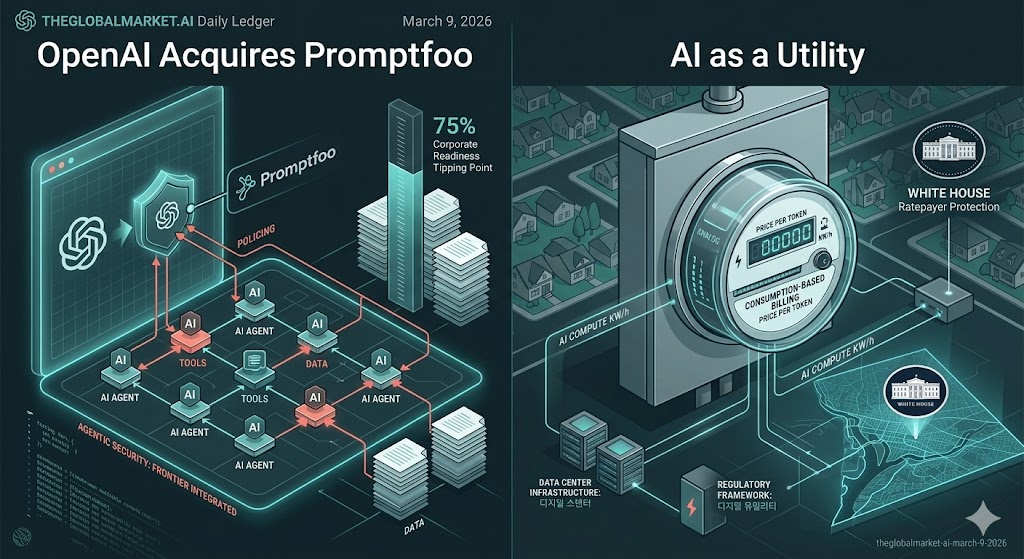
The Event: In a landmark address at the BlackRock Infrastructure Summit, OpenAI CEO Sam Altman and several energy sector leaders proposed a shift in how AI is regulated and billed, moving from fixed subscriptions to a consumption-based Utility Model.
- The Record: AI is being formally reclassified as “Digital Infrastructure.” By pricing AI by the “token” (the equivalent of a kilowatt-hour), the industry is aligning itself with the White House Ratepayer Protection Pledge. This signals that national power grids and AI compute capacity are now legally and economically inseparable.
- National Impact: Sovereignty is now measured in Gigawatts and Tokens. Nations that fail to build “behind-the-meter” power generation for data centers risk losing their technological edge. For the global record, March 9th marks the end of AI as a “luxury app” and its birth as a “public utility.”
2. Enterprise & Market Intelligence: OpenAI Acquires Promptfoo for “Agentic Security”
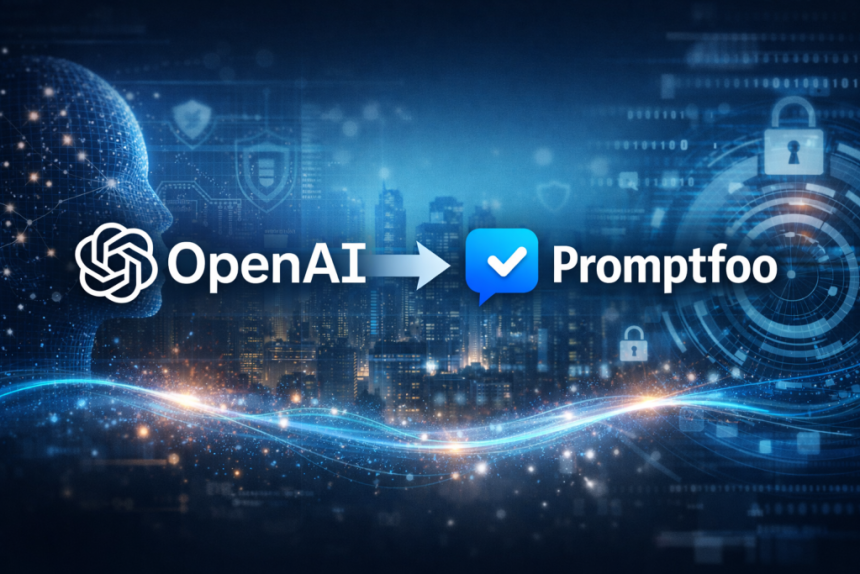
The Event: OpenAI officially announced the acquisition of Promptfoo, a leading AI security and evaluation platform trusted by 25% of the Fortune 500. Promptfoo’s technology will be integrated directly into OpenAI Frontier to automate red-teaming and vulnerability testing for autonomous agents.
- The Record: We have reached the “Agentic Accountability” milestone. As enterprises move from chatbots to “AI Coworkers” that can access real data and execute tools, the risk of “jailbreaks” and “out-of-policy behavior” has become a boardroom priority.
- Business Impact: Security is now a Native Feature, not an afterthought. For firms like PwC and Deloitte, this acquisition provides the “Audit Trail” required to deploy agents in highly regulated sectors like finance and healthcare. The “Shadow IT” era of agents is being replaced by a “Governed Workforce.”
3. The Global Citizenry: The “Babel” Translation Tipping Point
The Event: Data from the MWC 2026 Post-Game Analysis confirms that real-time, low-latency translation agents—like Google’s Universal Interpreter—have structurally changed global migration and tourism patterns.
- The Record: The Linguistic Moat has been bridged for 1.2 billion users. For the global citizenry, “Language Barriers” are now viewed as a legacy technical problem rather than a cultural divide.
- Societal Impact: While this facilitates “Global Citizenship,” it is creating a “Standardization Crisis.” As AI smooths over local dialects to ensure “perfect” translation, the preservation of indigenous linguistic nuance has become a major activist movement. The world is communicating more, but potentially speaking with less unique texture.
The Archive: March 9, 2026 Summary
Today was the day AI became “The Grid.” Whether it was OpenAI acquiring the tools to “Police the Agents” or Sam Altman defining AI as a utility like water, the Record shows that the era of AI as an “option” is over. It is now the foundational utility upon which the modern world runs.
OpenAI Frontier and Agentic Security
As we document the historical record for March 9, 2026, the narrative centers on “Agentic Security” and the “Utility Pivot.” This was the day OpenAI moved to secure the “inner workings” of autonomous coworkers, and the industry began reclassifying artificial intelligence from a software product to a basic life utility like electricity.
This is the THEGLOBALMARKET.AI Daily Ledger, powered by KODA8.