



The Record of “The Legal Wall”: April 7, 2026, was defined by a massive surge in Litigation as a Moat. The day was headlined by WHOOP’s $10B trade dress lawsuit against AI health upstart Bevel, signaling that hardware giants are now using the courts to protect their “Personal Health OS” from agentic disruption. Simultaneously, Samsung forecasted an eightfold profit surge driven by HBM (High-Bandwidth Memory) demand, and NIST released a new framework for Trustworthy AI in Critical Infrastructure. It was the day the industry realized that while the tech is accelerating, the legal and regulatory “Shields” are being built just as fast.
- #1: The UX War: WHOOP Sues AI Health Coach Bevel for $10B
- #2: The Memory Boom: Samsung Projects 800% Profit Surge
- #3: Federal Safety: NIST Releases “Critical Infrastructure” AI Profile
- #4: AI in the Courts: National Center for State Courts (NCSC) Issues Guidance
- #5: The Governance Gap: 63% of Orgs Have AI, but only 50% Have Rules
#1: The UX War: WHOOP Sues AI Health Coach Bevel for $10B
In a landmark case for the Personal Health OS, WHOOP filed a massive trade dress infringement lawsuit against Bevel, an AI-powered health coach. WHOOP alleges that Bevel’s “Agentic Interface”—which syncs data from Apple and Garmin—is a direct copy of their patented user experience for tracking recovery and strain.
- Source: Insider Fitt – April 7, 2026
- How This Impacts You: The “Look and Feel” of AI matters. As AI Coaches become standard, big tech companies will try to “lock you in” to their specific style of data. For you, this might mean your favorite AI apps get tied up in court, potentially forcing you to switch interfaces as companies fight over who “owns” the way your health data is displayed.
#2: The Memory Boom: Samsung Projects 800% Profit Surge
Samsung Electronics confirmed today it expects an eightfold increase in operating profit (to 57.2 trillion won) for Q1 2026. The surge is driven entirely by the “insatiable” demand for HBM (High-Bandwidth Memory) chips, which are the essential “fuel” for the NVIDIA Blackwell units running the world’s Large Language Models.
- Source: Gotrade News / Samsung IR – April 7, 2026
- How This Impacts You: A more stable AI economy. This massive profit surge means the “Chip Shortage” of 2024–2025 is officially over. For you, this translates to faster AI response times and more reliable Cloud Services, as the physical memory needed to power the “Digital Brain” is finally being produced at a global scale.
#3: Federal Safety: NIST Releases “Critical Infrastructure” AI Profile
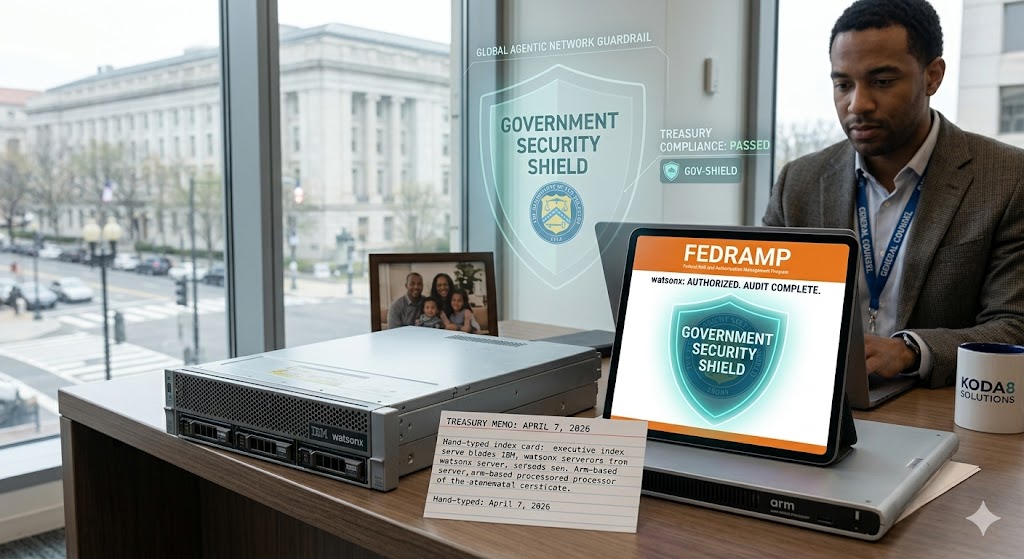
The National Institute of Standards and Technology (NIST) officially released a new “Concept Note” for its AI Risk Management Framework (RMF). The new profile specifically targets Trustworthy AI in Critical Infrastructure, providing the first-ever federal roadmap for using AI in power grids, water systems, and transportation.
- Source: NIST.gov – April 7, 2026
- How This Impacts You: Your safety is being “Encoded.” As cities start using Autonomous Agents to manage things like traffic lights or power distribution, this NIST framework ensures they are following a “Safety-First” protocol. It reduces the risk of “AI Glitches” in the physical world, making the infrastructure you rely on every day more resilient and secure.
#4: AI in the Courts: National Center for State Courts (NCSC) Issues Guidance
During the 2026 NACM midyear meeting, NCSC President Elizabeth Clement warned that while AI offers “incredible benefits” to the legal system, public skepticism remains high. The NCSC is now leading a national effort to balance AI benefits with the need for “Thoughtful Accountability” in our courtrooms.
- Source: NCSC.org – April 7, 2026
- How This Impacts You: A fairer legal system. Whether you are dealing with a traffic ticket or a complex business contract, AI is now assisting judges and lawyers. This guidance ensures that “The Machine” is never the final judge, maintaining the human oversight needed to ensure your rights are protected in an increasingly Automated Legal System.
#5: The Governance Gap: 63% of Orgs Have AI, but only 50% Have Rules
A major benchmarking report from GovInfoSecurity revealed a dangerous “Governance Gap.” While 63% of organizations have fully operationalized AI (up from 45% last year), fewer than half have established a formal AI Governance Framework to manage it.
- Source: GovInfoSecurity – April 7, 2026
- How This Impacts You: Corporate accountability. This report is a “Wake-Up Call” for your employers and service providers. It signals that we are in a period where companies are rushing to use AI before they know how to control it. For you, this means you should be asking the companies you deal with: “What are your rules for how you use my data with AI?”
Powered by theGLOBALMARKET.AI – Your AI Authority Hub