



New Privacy Protections and Major Upgrades Clear the Way for Smarter Everyday Tech
- #1: OpenAI Publishes the Frontier Governance Framework for Public Safety
- #2: Connecticut Governor Signs Landmark Law Regulating AI in the Workplace
- #3: Nvidia and Microsoft Tease a “New Era of PC” Ahead of Computex
- #4: KPMG Rolls Out Large-Scale Claude Deployment Focused on Security Scanning
- #5: States Advance Consumer Notice Acts to Call Out Customer Service Chatbots
Today brings a wave of updates focused on making artificial intelligence safer, cheaper, and much more practical for the everyday user. Big tech companies are launching new frameworks to protect user security, while historic new laws are rolling out to give normal citizens more transparency in their daily lives. It is a clear sign that the industry is focusing less on flashy tricks and more on fitting safely into our workplaces and homes.
Here are the five most important developments from May 29, 2026:
#1: OpenAI Publishes the Frontier Governance Framework for Public Safety
OpenAI officially released its new Frontier Governance Framework, a public roadmap showing exactly how its security protocols align with strict new consumer safety laws, like California’s Transparency in Frontier AI Act and the European Union’s AI Code of Practice. The document outlines how the company plans to test future systems for hidden security risks and prevent harmful manipulation before public release.
Why it matters to you: As smart tools become a regular part of our kids’ schools and our own daily routines, knowing there are transparent, legal guardrails keeping the technology safe gives your family greater peace of mind. It ensures the systems you rely on are being built with strict oversight to protect your privacy and digital well-being.
→ Read OpenAI’s security framework
#2: Connecticut Governor Signs Landmark Law Regulating AI in the Workplace
Connecticut Governor Ned Lamont signed a major bipartisan law that strictly regulates how artificial intelligence can be used by employers. The new legislation forces companies to give workers and job applicants clear, upfront disclosures if automated software is being used to make or heavily influence hiring, firing, or promotion decisions.
Why it matters to you: If you are looking for a new job or working at a company that is modernizing its tech, this law protects your right to a fair, human review. It sets a growing nationwide standard ensuring that an automated computer program cannot silently impact your career or your family’s livelihood without your knowledge.
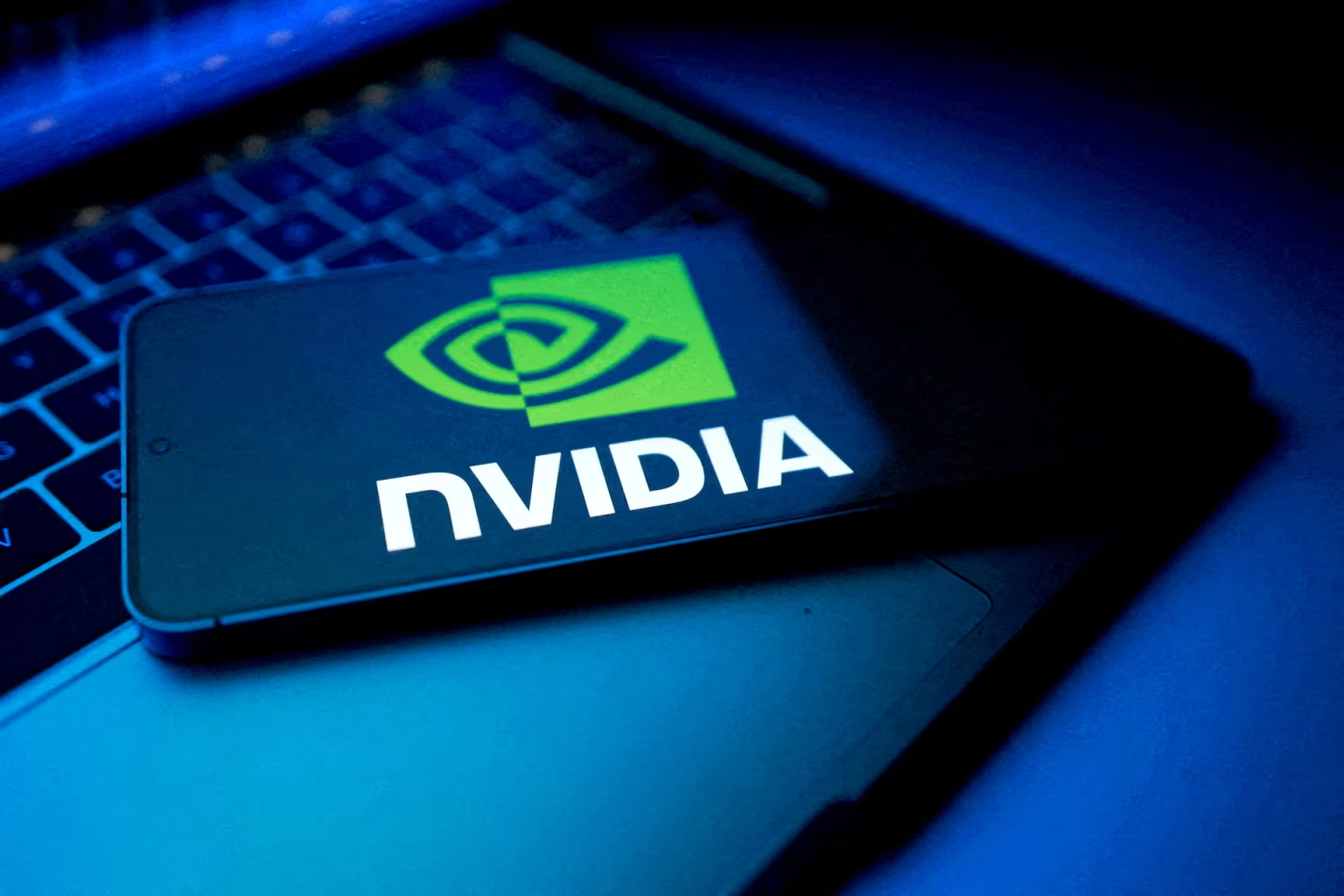
#3: Nvidia and Microsoft Tease a “New Era of PC” Ahead of Computex
Tech giants Nvidia and Microsoft sent out coordinated announcements teasing “A new era of PC” just ahead of the global Computex technology conference. The preview indicates that the next generation of home and office laptops will have AI processing built directly into the computer’s physical hardware chips rather than relying on an internet connection.
Why it matters to you: This means when you buy your next family computer or upgrade your small business laptops, the devices will be vastly faster, have much better battery life, and process your personal tasks locally. Because your files and requests won’t need to travel over the internet to a remote server, your household’s personal data stays strictly private on your own desk.
→ Check out Nvidia’s latest developments
#4: KPMG Rolls Out Large-Scale Claude Deployment Focused on Security Scanning
Global professional services firm KPMG finished deploying Anthropic’s “Claude” AI assistant to its massive network of clients, focusing the system heavily on scanning for hidden software vulnerabilities. The setup allows teams to spot and patch security holes in corporate networks in under an hour, a process that used to take engineering teams weeks to complete.
Why it matters to you: While this sounds like corporate tech, the networks being scanned include the financial systems, private equity holdings, and business platforms that regular people interact with every day. By using AI to rapidly fix digital locks behind the scenes, it keeps the online services your family and small business rely on much safer from hackers and data breaches.
#5: States Advance Consumer Notice Acts to Call Out Customer Service Chatbots
State legislatures across the country, including Illinois and Ohio, advanced a series of consumer protection bills like the Consumer AI Notice Act. These laws require any business using an automated chat interface for customer service to display a clear and conspicuous notification letting the consumer know they are talking to a machine and not a real human being.
Why it matters to you: We have all experienced the frustration of trying to get a straight answer from an online help desk. These new rules protect your time and clarity, ensuring that when you are dealing with a small business supplier, utility company, or online store, you always know exactly who—or what—you are dealing with.
Bottom Line for May 29, 2026: Today’s news proves that the world of artificial intelligence is growing up and learning to follow the rules. Between federal security frameworks from tech creators, strict state laws protecting workers, and upcoming computers designed to keep your information at home, the focus has completely shifted toward safety and transparency. It means the tools we use are becoming more reliable partners for our families and our businesses.
Making the Future Familiar.
Some links in this post may be affiliate links. If you sign up or make a purchase through them, we may earn a small commission at no extra cost to you.